Search This Blog

Saturday, April 30, 2011

Recipe: Savory Mango Soup


Had a tough time with this pic. It looked even better in real life!

I know it's been a while, so I am going to reward your patience with an original recipe. How about that? Enjoy!

Ok, I am sure that someone somewhere makes something like this soup, but I have honestly never had it or heard of it. I am going to consider it a personal creation for now. I was literally struck by inspiration one day, and the final product was so delicious, I made it again and am now sharing the recipe with you. As far as soups go, this one is really easy and doesn´t take long to make (as little as 45 minutes if you don´t simmer it too long). Prep time is super fast, probably 5-10 minutes depending on how fast you work a knife. You´ll need a blender (stick blender is convenient but an upright blender works too) and a mesh strainer. We have a big one that cost $2, and it´s perfect for soups.

If you are averse to mango because of it´s texture (like Maru), don’t worry! This soup will leave you with nothing but the delicious tart, tangy, and slightly sweet flavor of a ripening mango. It also feels great on the throat. I think it would be really nice for someone with a sore throat.

While the soup isn’t hard to make, the color is gorgeous, and it could easily be part of an elegant dinner. It´s pretty light, which makes it good to accompany other light, summer fare like veggie dishes, fish, or chicken. But that’s all just suggestion. Do what you will!

Also, I haven´t tried it yet, but I bet this same recipe would work well with tart peaches. I’ll have to try that and get back to you.

About mangoes


These are the mangoes you want.

Mangoes are all over the place in the markets in Mexico right now. The big red, yellow, and green ones are the best for this recipe in my opinion. They are tarter than the little yellow mangos, which makes them great for savory dishes. Plus, for those of you in colder climes (I´m looking at you Michigan people), they are much easier to find. You want to use them for soup when they are still pretty hard, not exactly green, but not exactly ripe and sweet. The fruit should yield slightly when you squeeze it.

Here is a really easy way to clean any mango whether you want to use it for a recipe like this or just eat it:

1. Rinse the fruit under cold water.

2. Stand it up on its end and with a sharp knife, cut just along the large pit (about a ¼ inch off center). Repeat for the other side. Your knife should scrape along the pit as you go so that you get as much fruit off as possible.

3. Using a spoon, scoop the fruit out of its peel in one, large piece.

4. Chop or slice as desired.

5. Remove the peel from around the pit. Cut off any excess fruit or just nibble on it (be ready to floss afterwards!)


Savory Mango Soup

1 Tablespoon veggie oil

1 small onion, chopped

1 carrot, chopped

2-3 cloves garlic, minced

1 Tablespoon ginger, minced

1 roma tomato, chopped

2 large mangos, cleaned and chopped. Reserve the pits. (Best if not quite ripe. See instructions above.)

2 dried chiles de arbol whole, with seeds removed (Any other smooth skin dried chile will work too. You can skip the chile, but it adds a really nice flavor, and if you remove it before blending, you probably won´t even notice the spice.)

½ inch piece of cinnamon, whole

6-8 cups veggie stock, heated (calculate about 1 ½ cups of stock per serving)

1 avocado, chopped

¼ cup chopped fresh parsley

Salt and pepper to taste

Heat the oil in a large pot over medium eat. Add the onion and carrot with a sprinkle of salt. Sautee until the vegetables are beginning to soften, about 5 minutes.

Add the garlic and ginger and sautee until very fragrant, about 2 minutes. Add the tomato and cook for another 5 minutes. (If you have a little white wine on hand, this would be a good time to throw in a ¼ cup or so. Cook until the liquid is almost completely evaporated.)

Add the chiles, cinnamon, and mango. Add another pinch of salt. Stir and cook for about a minute, then pour in the stock. Add the pits to the pot (without the peels!). As they simmer, that extra fruit and juice clinging to them will add its flavor to the soup.

Bring the soup to a boil then lower the heat to a simmer. Cook for at least 20 minutes, preferably about 40 so that the flavors can come together.

Remove the mango pits and the cinnamon stick. If you are concerned about your soup being too spicy, you can also take out the chiles. If you want it to have a little kick, leave them in there.

Using a stick blender or in a regular blender in batches, puree the soup. Taste and adjust seasonings. Pour the soup through a medium mesh strainer. This filtering will remove a fair amount of roughage and leave you with a wonderfully silky soup. Adjust the seasonings on the strained soup one last time, and get ready to serve!

To serve, divide the chopped avocado among six soup bowls. Ladle in the soup, then sprinkle with chopped parsley. Serve immediately.

Wednesday, April 13, 2011

Recipe: Enfrijoladas

I plan on adding more basic recipes (rice is on its way, just needs a little testing), but for now, let´s start looking at ways to use what I just posted on Monday and Tuesday. I also promise to take some pictures soon. I just haven´t made some of this stuff recently. As soon as I take them, I will add them to the posts. After all, you eat with your eyes first! For now...

Now that you know how to make beans, here is a staple of our household. Enfrijoladas (En-free-hoe-lah-dahs) are common all over Mexico. Usually in restaurants, the tortillas are filled with shredded chicken, and the beans are turned into a thick sauce, sometimes with a little aniseed added in. It´s really good that way, but this version is a Bautista (Maru´s family) breakfast, lunch, or dinner special. It´s quick (with the beans already made, it will be ready in about 10 minutes), versatile (you can change the filling to suit your taste, and you can top it with whatever veggies you might have on hand), cheap, and hearty. Two tortillas is usually good for both Maru and me (I usually put more beans on my plate). If you´re a big eater, you could do three or even four. Whatever floats your boat, as they say.

Enfrijoladas (Vegetarian)

(Ingredients listed are for two servings. Increase or decrease at your leisure.)

4 tortillas (corn or flour, your preference)

1 beaten egg

2 cups prepared beans with their broth, heated piping hot

Salt to taste

1 Tablespoon veggie oil (you´ll probably need less than this)

Optional toppings:

  • Diced or shredded cheese (any mild melting cheese is good)
  • Diced tomatoes
  • Sour cream or yogurt
  • Hot sauce or homemade salsa
  • Chopped cilantro
  • Sliced avocado

Heat about a teaspoon of the oil over medium-high heat in a frying pan. Once the oil is hot, begin lightly frying the tortillas one by one for about twenty seconds on each side. They should still be pliable, you´re not making tostadas. Add more oil as needed. (If you want to skip the oil and go for a lower fat version, you can. Just heat up the tortillas until they are soft. The difference is that they will fall apart more once you finish the dish. Frying them gives them a little more body.) Set the fried tortillas aside.

Add a pinch of salt to the egg, and then pour it into the pan and cook yourself a scrambled egg. Divide it into four equal portions. Use the portions to make rolled tacos with your tortillas. Place two tacos in a dish (a large soup bowl works great). Pour about a cup of beans with broth over the tacos. Salt to taste, add desired toppings, and enjoy!

If you want to use cheese, I recommend putting it on top of the tacos before pouring on the beans so that the heat from the beans will melt it.

Tuesday, April 12, 2011

Recipe: Mexican Beans

Frijoles negros

Beans, beans the magical fruit. Many people have written about the health benefits of this near perfect food (fiber, protein, iron, oh my!), so I won´t go into it. Needless to say, you should eat beans! And not out of the can. It is so easy to make your own. With a pressure cooker, you don´t even really need to plan, no soaking or anything. And you need very few ingredients. If you have dried beans in your pantry, you always have a delicious and nutritious meal on hand, and they´re cheap! Probably the biggest bang for your buck in terms of nutrition and filling you up.

You will have to make them a few times in order to perfect the texture but that doesn´t mean your beans won´t be tasty, they just won´t be perfect J (I´m pretty sure that takes a while. I´m still working on it).

Here in Mexico, they say a house is not a home if there are no beans. In Puebla, black beans are the most common (and they are often referred to as frijoles Michigan!), but if you go to the market, you´ll be dazed by the different colors and sizes.

This recipe is of my own creation, incorporating some tips that Maru´s grandmothers have given me as well as some tricks we´ve developed on our own. One classic mistake you do not want to make is over-seasoning. Notice that besides the beans, even if you add in all the optional ingredients, it´s just onions, chile, epazote, and salt. No garlic, no cumin, no pepper, nothing. And if you just want to use onions and salt, your beans will be yummy. The things are bursting with flavor all on their own.

Also, if you are concerned about gas from beans, you can always use Bean-o, but in reality, if beans and other legumes (like lentils) are a regular part of your diet, you won´t notice any discomfort or excess gas, because your body will be used to processing them. So don´t worry about taking them to work for lunch!

Basic Beans (vegan depending on fat or stock used)

2 cups dried beans (black, pinto, whatever your preference)

1 medium white onion, halved

1 sprig fresh epazote (optional)

4-6 cups water

2 Tablespoons vegetable oil (lard is good here too)

1-2 whole dried chiles (optional. Remove the stem and seeds. Pasilla, guajillo or chile de arbol are good.)

Salt to taste

1-2 cups chicken, veggie, or pork stock (optional)

First, you need to get those dried beans cooked. There are a few different ways to do this; in a pot on the stove for hours, in a crockpot, or in a pressure cooker. The latter, obviously, is the fastest way, and in my opinion, gives the best result. Our pressure cooker was left behind in the States, so we´ve been using the crockpot, which works, but the texture of the beans isn´t quite as good. If you are going to just do them in a pot, you will want to soak the beans overnight. For all three versions, rinse the beans well, place them in your pot of choice, cover with enough water or stock for the beans to triple in volume, put the onion and epazote (if using) in the water and cook. Don´t salt the beans for this first step as it may make them tough.

On the stove in a regular pot, covered: Bring to a roiling boil, then lower the heat to a simmer. The beans will take anywhere between 2-4 hours to cook, depending on how fresh they were to begin with.

In a crockpot: Cook them on high for 4-5 hours or on low for 8-10 hours. This is a good way to do them overnight.

In a pressure cooker: Cook them under pressure for 35-45 minutes.

However you first cook your beans, you can taste them to see if they are done. Also, when you spoon out a couple and blow on them, the skin should split. Perfectly cooked beans should be soft but not mushy.

To finish the beans after they are cooked, thinly slice the other half of the onion. Heat the oil over medium heat in another pot large enough to hold the beans with water (a cazuela is perfect for this). Sautee the onions until they are beginning to soften and brown, about 5-7 minutes. If you want to use chiles, now is also the time to add them. Add about half a teaspoon of salt to the chiles and onion. Continue cooking and stirring as the onions brown (if a couple blacken, that´s ok. This is a dish where that is a nice flavor.). The chile will become very fragrant and blacken just slightly.

Here is the secret to a delicious finished bean broth. As your onions sautee (or before you start cooking them if you prefer to avoid multitasking in the kitchen), remove the other onion half and the epazote from the cooked beans. Remove the epazote leaves from the woody stem and discard the stem. Place the onion and the leaves in a blender with about a cup of the bean water and a half teaspoon of salt. Blend until smooth then add the mixture back to the beans. (Note: I have also been known to cook a dried chile with the beans and blend it up too. It´s nice and makes the final broth spicy.)

Once your sautéed onions and chile are ready, dump the beans and their water into the pot and stir to combine. Add another half teaspoon of salt and if you wish, now is a good time to add some stock. On its own, the bean broth will have a lot of flavor, but you can make it even richer with a nice homemade stock. It also depends on how watery you want them. Some people like a lot of broth. You need to have enough liquid for them to be covered, but beyond that, it´s your preference. Simmer this final mixture for at least 10 minutes and up to 30. The flavors will develop nicely. Taste and adjust seasonings as needed.

Your beans are now ready to be enjoyed as is, as a side, for enfrijoladas, or however you like them. The beans are best the first and second day, but are good in your fridge for up to a week. Once they´ve been refrigerated for a few days, then you can consider making refried beans. Refried beans are supposed to be made with older cooked beans. It´s a way to bring them back to life.

Refried beans: Heat 1-2 tablespoons of veggie oil in a pan over medium-high heat. Sautee a little onion (depends on how many beans you have left, you don´t want it to be too oniony) and a fresh, diced chile (jalapeño or Serrano). Add the beans to the pan with just some of their broth. Cook until hot, then start mashing them with a potato masher. Add more of the broth as they soak up the juice and until you get the consistency you want (again, personal preference dictates how liquidy you want your refried beans). Salt to taste, and you´re done. Takes about 10 or 15 minutes to make refried beans. Now they´ll be good in your fridge for another 3 or 4 days.

Go forth and make beans! Seriously.

Monday, April 11, 2011

Recipe: Salsa Verde

It´s time for some Mexican basics. This week and next, I want to share some simple, everyday Mexican recipes so that anyone who wants can start getting to know this wonderful and versatile cuisine for what it really is (hint: it´s a lot more than just tacos and burritos, and there´s not really any ground beef involved.) So here comes basic recipe #1, one of Maru´s favorites: Salsa Verde.

Go to any restaurant in this part of Mexico and you´ll usually get two little bowls of salsa, one green, one red. Depending on the establishment, the specifics of the salsa (the chiles used, roasted or not, etc.) will vary, but those are the colors. The green is made with a base of tomatillos, which look like little green tomatoes in a husk. Over the past few years, they have become readily available all over the US. I think even Glen´s in Grayling has them.

The recipe here is for a basic and versatile green salsa. It can be used just to dip, for enchiladas, chilaquiles, or whatever else you can think of. There is almost no chopping, and from start to finish, it will be done in about 20 minutes, super easy. It is great when it´s fresh, but making it a day ahead is also not a problem.

For a more rustic version, you can skip the blender or food processor and use a molcajete or large mortar and pestle to smash everything together.

Salsa Verde (makes about ½ liter of salsa, easily doubled) Vegan

1lb tomatillos (or ½ kilo)

¼ of a medium white onion

1-2 cloves of garlic still in their paper

1-3 serrano chiles (If you are worried about spiciness, you can also use a jalapeño, which is a little milder. This salsa is supposed to be on the spicier side, but make it how you want it!)

2/3 cup, chopped, loosely packed cilantro (including tender stems)

½ teaspoon salt or to taste

First, remove the papery husks from the tomatillos and rinse off the sticky coating they have.

There are two basic ways to begin this sauce, both are tasty, but the flavors will be different. The more traditional way is to place the tomatillos and chiles in a pot of water, bring them to a boil, and cook them for 3-5 minutes, until the tomatillos are soft. The onion and garlic should be roasted. Place them in a dry, non-stick pan over medium-high heat or on a regular pan coated with tin foil. Turn them so they roast and brown evenly.

The second way is to grill or broil the tomatillos, chiles, onion, and garlic. Whether on the grill or in the broiler, you want everything to blacken evenly. This method will give the sauce a smokier, deeper flavor. It´s my favorite version of the two.

However you cooked the tomatillos and chiles, now you just need to blend! If you want a milder salsa, remove the seeds from your chiles. Remove the garlic from it´s paper. If you grilled the tomatillos, you do not have to peel the blackened skin off. It´s a big part of the flavor. Place all the cooked veggies in a blender or food processor and blend until smooth. Add the salt and the cilantro and blend until everything is incorporated. Be careful of the blender top popping off if the salsa is hot!

Taste your salsa to see if it needs more cilantro or more salt. Remember that while the temperature of the salsa is hot, it will taste spicier. Once it cools down, the spiciness will mellow out. Sometimes, depending on the tomatillos, the finished product will be a little too acidic. You can add a teaspoon or two of sugar to offset the acid. Again, it will mellow with a little time.

The salsa is best used right away, but it will still be good in your fridge for about a week. Don´t worry if it is kind of like jelly after a day or two in the fridge. That´s just the tomatillos setting up. Once you reheat the salsa (in the microwave or on the stove), it will be back to a smooth consistency.

Enjoy! More recipes using this one to come soon...

Friday, April 8, 2011

Travels: Mérida, Yucatán Part V

Day 6: Celestún

Yucatán 2011 Day 6, Celestún

Mérida is almost literally at the center of the Yucatán, so everything is relatively close, including the beach. Although we had gotten a nice strong dose of waves and sand in Mazunte recently, we still wanted to head to the coast at least for a day, so we went west to the town of Celestún on the Gulf coast. It didn´t take us long to get there (and we had finally started to figure out a clean exit from the city) along the usual straight, flat Yucatán highways.

Celestún is located in a biological reserve that includes coastal waters, mangrove lagoons, and flamingo nesting and breeding hotspots. On our way into town, we pulled off to the side to investigate prices and details from the tours that they lead, but we were greeted by something that just felt off somehow, owing in no small part to the exorbitant price they wanted to charge. In the past, we have had mixed results at best with “eco-tours” and we didn´t feel like gambling this time around. Plus, it is just a real turn-off when there are a whole bunch of motorized boats cruising in and out of what is supposed to be a protected ecosystem. We decided to take a pass and just head to the beach.

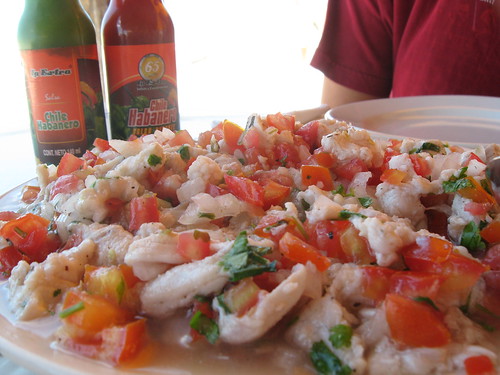
One of the first restaurants we spotted from the street looked good enough so we parked, walked down to the water and ordered some ceviche. When we first arrived, the water was calm, sapphire-green, and glassy. Almost the complete opposite of the raging waves we had grown accustomed to in Mazunte. Needless to say, we were looking forward to a swim later. While we waited patiently for our ceviche, we played a couple rounds of Settlers of Catan Travel Edition and Maru won, as usual, and then during our wait for food (which continued to grow), the wind started to pick up a bit, then it picked up a lot. Next thing we knew, the waves looked more like the waves in Mazunte, and we were actually chilly from the wind, so once our massive plate of ceviche arrived (we ordered the small), we carried it into the shelter of the inside of the restaurant to enjoy.
Yucatán 2011 Day 6, Celestún

Our mountain of ceviche.

After stuffing ourselves silly with fish, we decided to try to get into the water on the still very windy beach, but we ended up just walking up and down a bit, then Maru found a really pretty set of pearls for sale. They had all sorts of colors, and they were cheap because they were not perfectly round pearls, and actually part of their charm is the different shapes. With new pearls and bellies full, we decided that Mother Nature had won the day and it was time to head back to home base in Mérida. We felt a little dejected because the whole thing was a bit of a bust, but our reward was waiting literally just around the bend.

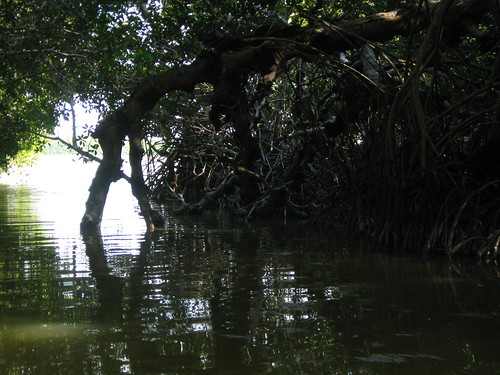
On the road out of town, a sign caught our eyes that offered tours of the lagoon in canoes, not in motorized boats. We thought, why not? Couldn´t be worse in price than the tours at the entrance. It turned out to be a highlight of our entire trip. For 2.5 hours we had a riverboat and a young, knowledgeable guide all to ourselves, and they even gave us each a really decent set of binoculars, all for less than the price of the other tour. (Sidenote: Maru and I have decided that we have to purchase a small pair of binoculars for our trips. There are so many instances when it would be great to have a pair.) Our guide, Christian, pointed out the different kinds of mangroves, horseshoe crabs (a first for Maru), enormous, tree-bound termite nests, different species of fish, and a staggering variety of water fowl. We spent a fair amount of time in a long mangrove tunnel where the water was shallow and calm and we could ask the 80 million questions we always have. Christian was young (17, I think), but he knew just about everything there was to know. Not only did he grow up nearby, but the cooperative that runs the tours intensively trains their guides.
Yucatán 2011 Day 6, Celestún

The mangrove tunnel.

The tour included a few short walks and even a ¼ mile bike ride at the end, so we got to enjoy the scenery from lots of different perspectives. In spite of Celestun´s flamingo fame though, we didn´t even see one. One “disadvantage” of the tour we chose is that it only stops at what they call the flamingo dormitory, which is where they roost for the night, but when we arrived we were too early. Oh, well. We had seen thousands of flamingos up close and personal near the Uyuni Salt Flats in Bolivia. But, we still had an interesting moment at the dormitory. While we were admiring the view and spying other types of birds, the wind from earlier in the day picked back up. We were at the end of a long dock in the middle of the lagoon, so the wind whipped around us, and out of nowhere, while I had my hands and concentration firmly focused on my binoculars, a gust picked my sunglasses up off my shirt where they were hanging and knocked them down. I lunged for them on the dock, but another little gust blew them into the water, and they sank.

Sidebar: I have a storied history with sunglasses. My Aunt Laurie has always gotten us nice glasses, and the last really nice pair she got me, I lost (or they were possibly stolen) several years ago in Xcaret. I bought myself another, not-so-nice-but-not-so-bad pair and left those on a bus to Mexico City, and then my brother gave me a nice pair of Oakley´s that I took to South America, where they broke and were duct taped for half the trip. Sigh. After our trip to the beach in Mazunte, I decided that I had to bite the bullet and buy myself a pair here in Mexico even though prices on things like that tend to be much higher here than in the States. My aunt is always talking about Maui Jim´s, and I found out that while they are a bit more expensive here, it wasn´t so much that it was worth the wait, so I slapped down the cash for a nice pair of glasses, promising myself to take care of them and enlisting Maru in helping me. They are great glasses, and the pair I bought is super light. It doesn´t feel like you even have anything on your face, and they do not resist strong gusts of wind in the middle of flamingo dormitories.

So you can imagine my dismay at watching my one-week-old pair of glasses go into the drink. Honestly, I am not one to get attached to stuff, but that was a hard one to take. I knew the lagoon was shallow, and I was about to jump in when Christian, our guide, calmly said, “No, I´ll go for the boat and get in.” I tried to protest, thinking there was no reason for him to get wet, but he insisted, walked down the dock to the boat, and paddled over to where the glasses were, then got out, and fished them out in about five seconds. Lucky day, especially considering that the water was so murky, you couldn´t see a quarter inch down. Oh, and for another reason too, but let me get to that.

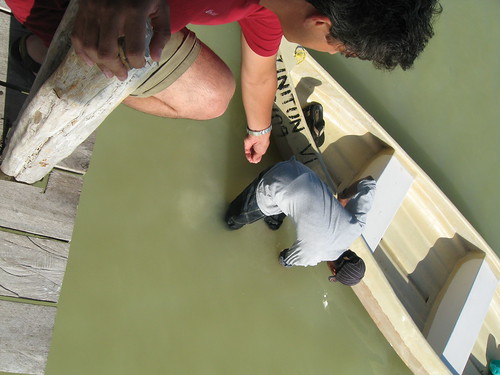
Then—oh yes faithful readers, there is a “then”—I decided to pocket them for the time being, so I took the little bag they go in out of my pocket and was trying to position it to get the glasses into it, when the wind snatched the bag out of my hand and blew that into the water. Facepalm. I couldn’t have cared less about the dumb bag, but I also didn´t want to leave litter like that in a biological preserve so I reluctantly informed Christian, who was returning the boat to where it was, of what happened. He said he would try to grab it so that it didn´t float away, returned to the spot, and was fishing around with his arm when he casually informed us that there are hundreds of stingrays buried in the sand of the lagoon. In case you don´t know, stingrays are dangerous because they bury themselves in sand in shallow water, and when you step on them, they don´t like it, and they live up to their name. If I felt like an idiot for dropping something in the water twice, I felt even more so that this kid was fishing around and risking a potentially deadly sting for something worthless. I told him to please forget it, and then Maru also insisted that he return to the boat, which he did, chuckling all the while at a dumb American tourist. Again, facepalm.
Yucatán 2011 Day 6, Celestún

This was about 2 seconds before he mentioned the sting rays.

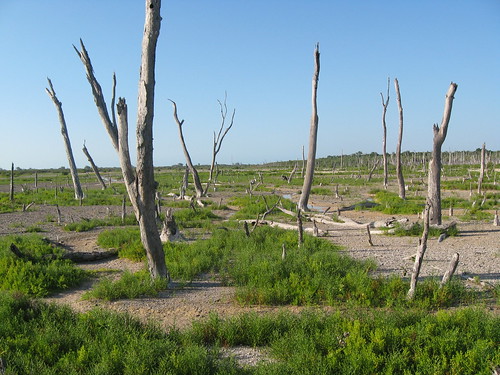
On the last leg of our journey back to where the tour started, Christian continued to tell stories about the stingrays around there. Apparently, they are so prevalent in the lagoons that the local fishermen get stung frequently. He even told us about his dad getting a bad sting once. Needless to say, I thanked him profusely for going in and for not letting me just jump in (That could have made for an interesting blog. I was about 2 seconds away from doing it.) He just smiled good-naturedly and moved on to tell us about the petrified forest we were then looking at. It was eerie, but gorgeous. All in all, no one was stung, my glasses were recovered, we learned a lot about the area, and saw lots of interesting flora and fauna. We were glad we skipped the first tour.

After we got back to Mérida, we found a little Italian place and ate some delicious pizza, then we called it a night.

Here are all of our Day 6 pics.

Day 7

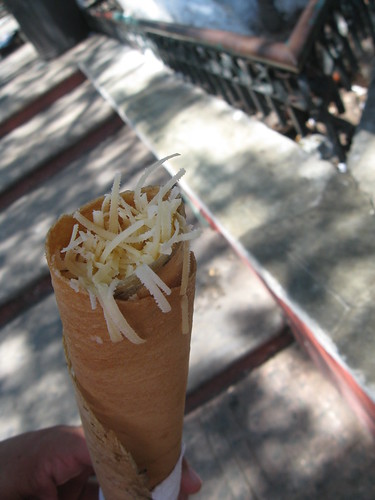
Our last full day in Mérida was Sunday, and Mérida on a Sunday is not to be missed. The streets around the main plaza are closed to traffic, people cruise around on bicycles, and hundreds of vendors fill the square with all sorts of things to sell; snacks, clothing, handicrafts, artwork, hats, knick-knacks, you name it. We ate breakfast then headed right downtown where we started things off with another marquesita. After our marquesita, we went on a free tour of the Casa de Montejo.
Yucatán 2011 Day 7, Mérida

Marquesita with Edam cheese.

Montejo was the name of the principal conquistador of the Yucatán. His son and nephew also inherited his legacy. They were probably swell guys, I´m sure. What is now known as their house has an elaborate façade facing the main square, and the inside was remodeled at the end of the 19th century by the then owners. Banamex (a big bank here) bought the building and used it as offices for a while before turning it into a museum. It´s full of cool looking 19th century-rich-people-stuff. Eh. For someone interested in architecture from the period, it´s worth a look.

Now it was finally time for our visit to the market! We don´t consider a visit to any city in Latin America complete without a walk through the market, and we were really looking forward to Mérida´s. Turns out, it´s huge. Three stories, and it sprawls over what must be at least two city blocks. Unfortunately, most of the stalls were closed because it was Sunday, but we still got a good sense of everything, and I bought some things I wanted, mainly different concentrates of sauces (like moles) to make some Yucatecan goods at home.

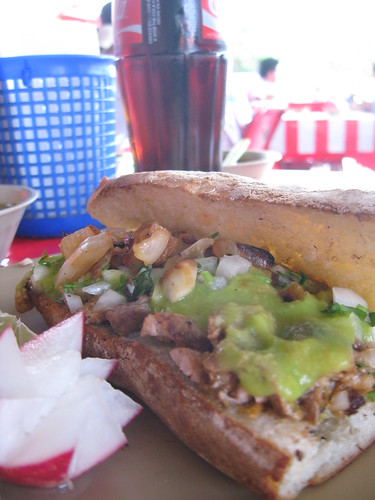
At that point we needed a snack, and we stumbled on a street of taco stands on one side of the market, sat down and ordered three rounds of different things to try: torta de carne asada, tacos de poc chuc, and tacos al pastor (Al pastor is really common in Puebla, but it´s a little different in Mérida.) All that and a coke: 36 pesos. I think both of our jaws dropped a little at how cheap that was.
Yucatán 2011 Day 7, Mérida

Torta de carne asada. That´s a sandwich!

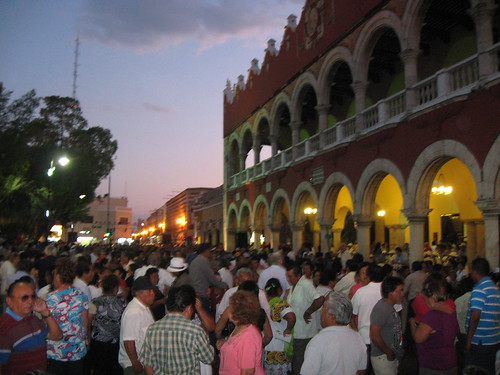
Back at the square, we bought ourselves little carved, wooden containers for salt and sugar, and then we found a gorgeous little guayabera (the white cotton shirts that are common in this part of the country) for our nephew, José Tobias. We bought it big because the kid is huge, and we can´t wait to see him in it! From there, it was time for a short rest and swim at the hotel, then we were back in the plaza for the Sunday night open-air dancing! It was great; live music, a cool breeze, and hundreds of happy couples. Maru was a little reluctant to join in because we were the youngest by easily 25 years, but it was worth it. After the first band played lots of Mexican golden oldies, a more modern band took the stage, and we hung out until we were hungry.
Yucatán 2011 Day 7, Mérida

Dancin´ in the streets!

In all our time eating out over the course of the week, we hadn´t gone out for a nice dinner, so this time we decided to splurge a little and ended up at a restaurant on the Paseo de Montejo called Slavia. It´s sort of an Asian fusion type place with kind of bizarre décor. We ordered a couple of glasses of wine, a Vietnamese spring roll and a seared tuna steak. Everything was cooked perfectly, and the tuna in particular was very yummy, but I found the meal to be pretty forgettable, especially for the price. Things have got to be top-notch to warrant a high price tag in a restaurant, and something about this just fell short (it didn´t help that a glass of wine was 90 pesos!). So we skipped getting dessert there, headed back to the square, got a rice pudding, and soaked up the Mérida night one last time.

Our last morning consisted of packing, going out for breakfast, buying a coconut ice cream cone (in a homemade cone!), turning in the rental car, and heading to the airport. We had a wonderful time in the Yucatán, and we will definitely be heading back there in the future.

Here is the link to our Day 7 pics.

Yucatán 2011 Day 7, Mérida
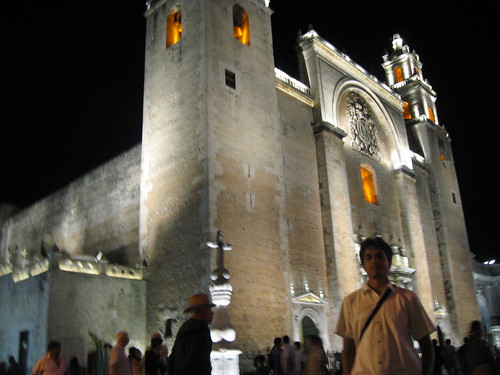
The white cathedral.

Thursday, April 7, 2011

Travels: Mérida, Yucatán Part IV

Yucatán 2011 Day 5, Mérida

Day 5: Mérida

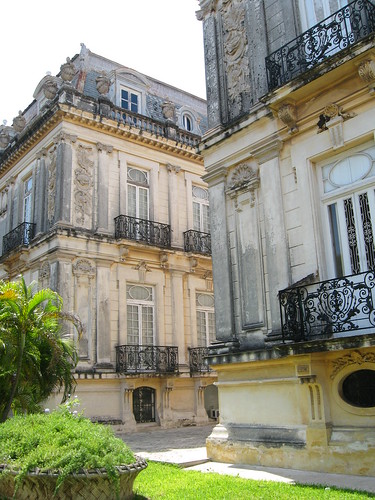
After our very busy Thursday, we decided to stay in town Friday, so we ate our mediocre continental breakfast then headed to the famous Paseo de Montejo. The Paseo de Montejo is where many wealthy plantation owners and businessmen built their mansions during the height of the henequen trade, so there are some beautiful buildings. We started our walking tour of the strip at the Museum of Anthropology which is in one of these old mansions.

The museum was great, very well laid out, with well selected representations of pieces from the region’s archaeological sites and lots of interesting information presented in an accessible and easy to follow format. This information was nice to have after having seen all the sites we visited. I think it also could have been a good prelude to visiting the actual sites in order to provide context for the different types of structures and artwork.

There was also a fantastic temporary exhibit on the second floor of the museum which consisted of dozens of photographs from the Mexican Revolution divided into phases. The Mexican Revolution was a long, bloody, and at times chaotic struggle that almost never really had clearly established sides. It was fascinating to see common workers, farmers, and soldiers along with the famous figures captured in photos. I cannot imagine what it must have been like to live through such a tumultuous period.

Taking our leave of the museum, we headed to the Santa Ana Market for a snack and were immediately bombarded by the waiters of each stall trying to get us to sit at their tables. It’s always a little stressful when you don’t know which one to sit at and they are all so insistent. We finally chose one, and I ordered a dragonfruit water, which was delicious and refreshing, along with brazo de reina, which is a regional tamale made with eggs and chaya. Maru ordered cochinita pibil tacos. Everything was good, but the brazo de reina was definitely a misplaced order as it was a huge portion and really heavy for noon on a hot day. I couldn’t finish it, which left me a little upset, because I hate wasting food, but that was that.

With some calories in our stomachs, we walked up and down the Paseo, stopping in a couple of shops and admiring the buildings. From there we headed back towards our hotel looking for a place to eat a full meal, and we got lucky, finding a little restaurant with a delicious and light “menu del día” (they give you 3-4 courses for a low price) that consisted of salad, perfectly cooked fish served with pasta and squash, and a passion fruit mousse. It was just what we needed to offset the grease of our earlier snack.

Yucatán 2011 Day 5, Mérida

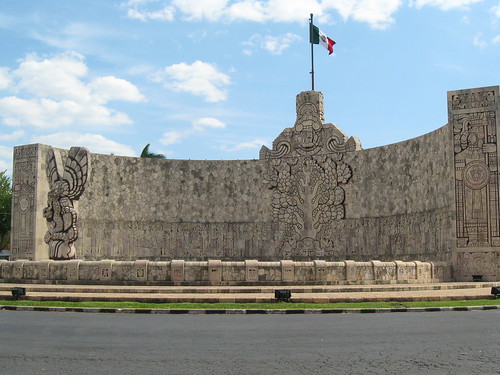
A monument at the end of Paseo de Montejo

Russ and Leanna, our new expat friends from the cenote trip, had invited us to their house for drinks that evening, so we rested for a bit in our room then headed out their way. Their house is a beautiful colonial a few blocks away from the main plaza in a really nice little neighborhood. They had a few other of their American expat friends over and we enjoyed a relaxing evening on their back patio which then progressed to the nearby loncheria for what I think were the best salbutes and panuchos we ate the entire trip, and we ended things with a nightcap with just Russ and Leanna back at their house.

Yucatán 2011 Day 5, Mérida

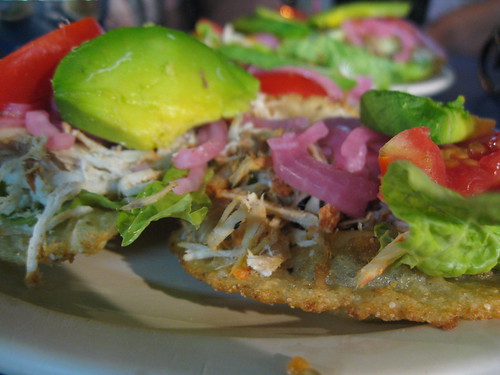
Panuchos. Handmade tortillas stuffed with beans, fried, then topped with goodies.

FYI, their place will be on House Hunters International in the near future. It was great to spend some time in someone’s house. The one downside of travelling is that you are constantly “out”, so you really appreciate the comforts of home, even if that home is someone else’s.


Yucatán 2011 Day 5, Mérida

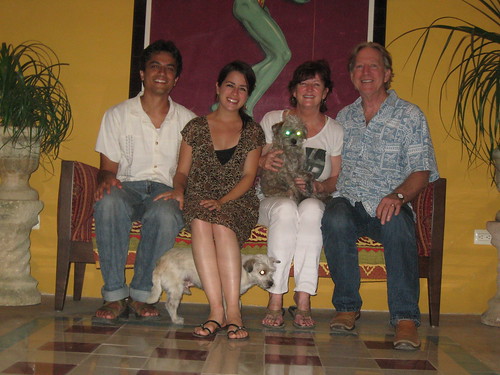
New friends! And their dogs.

Wednesday, April 6, 2011

Travels: Mérida, Yucatán Part III

Day 4: Chichén Itzá and Izamal

Yucatán 2011 Day 4, Chichén Itzá

On our fourth day, we were destined for one of the new wonders of the world, Chichén Itzá. I had been with my family back in 2005, but surprisingly enough, Maru had never been there, and she needed to check it off her list. Before heading out, we knew that we would want a little more information than you can get from the seemingly random plaques placed around Mexican archaeological sites, and we don’t like to hire guides too often (you never know if you’re hiring someone who actually knows what they are talking about, and they can be restrictive), so we had purchased a little guide book with descriptions of all the major installments of the site.

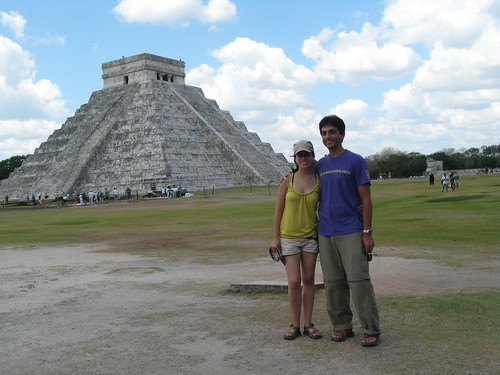
We got there at about 9:15 in the morning, well before the crowds showed up, and we began our exploration. Seeing the ancient city in the light of our trip down the Puuc Route on Tuesday and with the guide book pointing out key elements of the different structures really helped us to appreciate what it is that makes this site so special. I understand that for some people out there, archaeological sites aren’t anything to write home about, but we both love visiting and learning the little that is known. There is always something to discover, even in a site previously visited. After all, these sites are all, quite literally, entire cities, and we like to dig into the nooks and crannies. Of course, we also appreciate the grandeur of famous buildings like the Castillo de Kukulcán (the really famous flagship image of the site), but where you garner an appreciation for the sheer workmanship is in the details, and oh, does Chichén have details.

Yucatán 2011 Day 4, Chichén Itzá

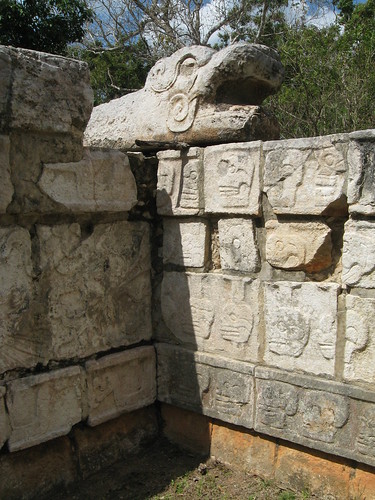
Everywhere you look, there are bas-relief carvings depicting everything from the ball game to creation to other legends and totems. And in a couple of places, the paint is still intact, and you can get an idea of what the murals originally looked like. We are total nerds and really get into speculating about what certain spots might have looked like or how they might have been used. Both Maru and I went through a want-to-be-an-archaeologist phase as kids. It is simply fascinating to contemplate cultures that are long gone but left such a lasting mark. While Mayan people still live and thrive along with their language and even some aspects of their cuisine, the specific culture that built these cities is really known to no one. In addition to the genocide of the conquistadors, there was a lot of fluctuation among the ancient civilizations themselves through trade, war, and even spiritual conversion. Later, in the anthropology museum, we learned that there is clear evidence that the Mayans ended up with products that had come from the southwestern US! That’s transregional trade on a level comparable to the Mediterranean, Indian Ocean, and the China Sea at the time.

Yucatán 2011 Day 4, Chichén Itzá

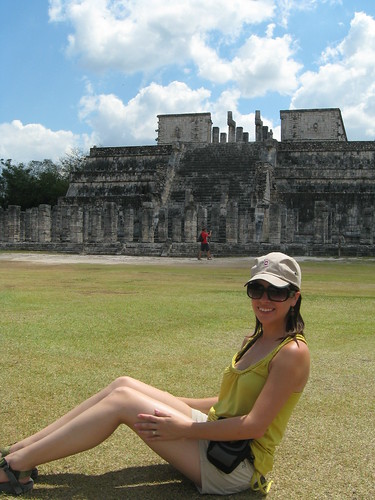
Maru posing like Chaac.

In total, we spent about 3 hours in the ruins of Chichén. Hunger and heat drove us out of the site. By the time we left, even more crowds had gathered. The place looked almost like Disney World with lines of international tourists. If you ever go, get there early.

Our next stop on the itinerary was the town of Izamal, but it was about an hour drive and we had some priorities. Being hot and hungry we wanted two things: a swim in a cenote and a snack! Priority one was the snack, and on our way through a little town called Libre Unión we saw a nice looking fruit stand. We ended up both eating a heaping plate of fruit that was prepared for us by a very nice woman while her equally nice husband offered us his chair in the shade and chatted with us about lots of different topics. He asked questions about our trip, we asked him questions about the area, he asked questions about Puebla and the US, we asked questions about his family, and he even tried to teach us how to count in Maya, but I think we were too sun-dazed to be very good students. When we asked him about a nearby cenote, he pointed us in the right direction, we paid for our fruit, exchanged well-wishes, and headed out.

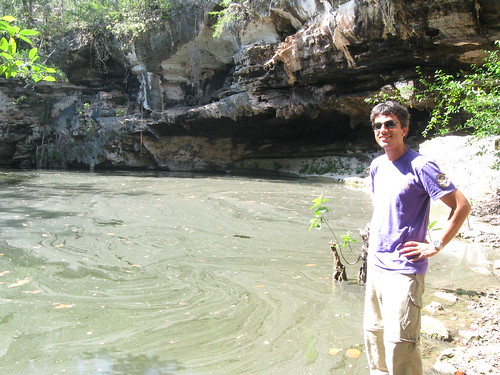
While our snack necessities had been met with a pleasant and refreshing experience well beyond expectations, things then fell short due to a somewhat disappointing cenote encounter. It was just outside of town, down a dirt road, and the rock formations around it were beautiful, and the thing was abuzz (literally) with life, but there was a little too much pond scum and algae for either of us to take a dip. And, from the hollow on the other side came a buzzing echo of a hive of bees or hornets that sounded like something out of a horror movie about killer bees. Once we decided that the buzzing was getting louder, we decided to get back in our car and throw in the towel on our swim. We just cranked the AC to lower our core temps a bit.

Yucatán 2011 Day 4, Libre Unión

Yeah, that didn't look very refreshing.

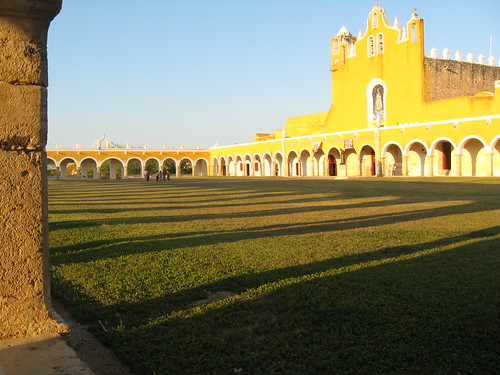
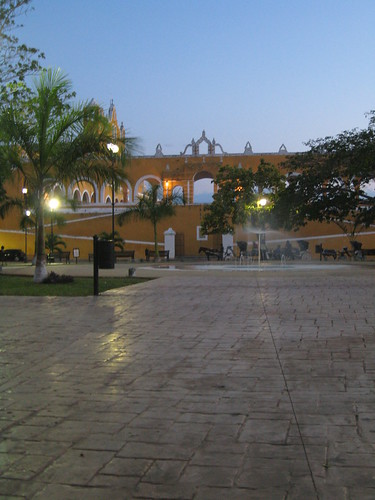
Then we arrived in Izamal, an official Pueblo Mágico, and it lived up to its title. As soon as we pulled up to park along the square, an elderly local official waved us into a spot and then greeted us with one of the most cordial welcomes I have ever gotten from a stranger. He pointed out the major destinations, which are principally four pyramids and an enormous Franciscan monastery. For some reason, which we didn’t investigate, the entire town is painted in sunshine yellow. I know, it sounds nauseating, but it actually works. The place looks great, and they have obviously invested quite a bit in public works to fix facades and beautify the public spaces. But before indulging fully in Izamal’s beauty, we had to eat for real. The fruit was wearing off and we needed a meal.

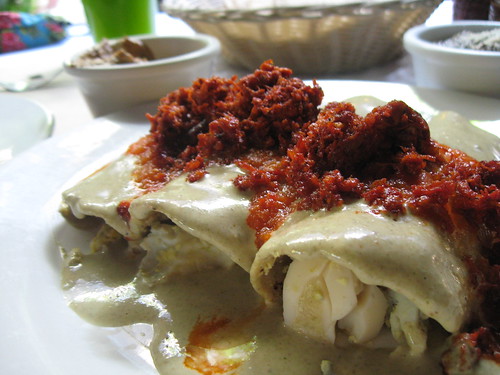
I had read about a restaurant called Kinich (and Rick Bayless had tweeted from there), but I wasn’t sure if it was going to just be touristy and expensive or actually good. Thankfully, it was the latter, in spades. I can safely say it was hands down the best dining experience of our trip; pleasant atmosphere, great service (a serious rarity in Mexico), totally reasonable prices, and of course, the food. Wow. I got a Chaya water to drink and Maru got herself a well-deserved Coke, then our waitress brought us sikil pak and tortilla chips while we perused the enticing menu items. Sikil pak is a dip made from pumpkin seeds and seasonings, like the texture of guacamole. We started with a sopa de lima (even better than the one from the previous day) and rice with fried plantains, then we finally tried papadzules. They are tortillas filled with chopped hard-boiled egg on a bed of a sauce made from pumpkin seeds and epazote. Traditionally, they are topped with more egg and a tomato sauce, but the ones we ordered came topped with longaniza de Valladolid, a chorizo from another major town in Yucatán. One of the best things we ate on the entire trip. I about licked the plate clean. Then came our tzik, which is slow-roasted venison shredded and mixed with onion, radish, and cilantro. They gave us handmade tortillas to eat it on, and it was gone in a flash. For dessert, we shared a very nice little flan. Ahh, Kinich. We wanted to go back like three more times.

Yucatán 2011 Day 4, Izamal

Papadzules. Be jealous.

Fully satisfied, we began our exploration of Izamal, which was kicked off by, you guessed it, scaling another pyramid. The thing must have been huge originally, but like the pyramid in Cholula, it is mostly overgrown, so you have to imagine its scale. Once we were on top, you could see for miles in every direction, with a superb view of the town below. After climbing down, we walked to the monastery, which is purported to have the biggest church courtyard outside of the Vatican. It’s big.


Yucatán 2011 Day 4, Izamal

Speaking of the Vatican, good old John Paul II gave mass at this monastery in 1993. Apparently, it was a big deal. There’s a statue and a portion of the museum dedicated to his visit during which he gave their statue of the Virgin Mary a crown and pearl necklace.

Pope John Paul II was and is adored in Mexico as he visited the country numerous times. We were just upset because when we read the speech that he had given during the mass, he pretty much declared the landing of Christopher Columbus as a holy event ("when the cross crossed the ocean," or something to that effect) and blathered on about the church always supporting the indigenous communities through hard times. Um, are you referring to the hard times directly sanctioned and instigated by the institution you were basically the CEO of? I felt my tzik coming back up after reading that. Yes, John Paul, the cross came across the ocean, along with disease, inquisition, oppression, enslavement, and the overall systematic eradication of hundreds of indigenous cultures, i.e. genocide. I definitely recognize that the pyramids and archaeological sites we admire were also built on the backs of slaves, but I think that people forget too quickly that every colonial church in the Americas is a veritable monument to the genocidal founding of our nations. The sick irony of it is that Latin America is 70-80% Catholic. Conquest: win. Remembering of history: fail. Anyway, here we all are.

We stepped out of the church museum and enjoyed a beautiful sunset over the main square while a military band practiced on their bugles. I am pretty sure that the definition of quaint was being clearly illustrated for us. On our way back to Mérida, we were content, thoughtful, and tired.

Here is the link to all of our pics.

Yucatán 2011 Day 4, Izamal